
Pulp & Paper / Forest Products:
The Innovation Lane

Our innovation lane for industry leaders seeking to pioneer spectral sensing to reduce downtime and chemical overuse. Join our pilot programs to translate complex fiber data into real-time operational decisions
Where We Act
Master Fiber Variability Across the Entire Production Lifecycle
Natural wood is inherently inconsistent. Our advanced spectral and hyperspectral arrays decode the molecular structure of timber and fiber streams inline, allowing your mill to automatically adapt process parameters in real time
Woodyard Optimization & Chip Characterization
Instant moisture, density, and wood species profiling

Stop treating every log delivery the same. Variations in wood chip moisture and density sabotage digester efficiency and yield. Our line-speed sensors audit incoming chip conveyors continuously, measuring dry matter content and mapping hardwood vs. softwood ratios instantly. Feed accurate composition profiles directly into your tracking systems to adjust chemical ratios before the cooking stage begins

Digester Efficiency & Smart Bleaching Control
Real-time tracking of Lignin removal and Kappa number stability
Eliminate the costly cycle of chemical over-dosing. By analyzing pulp streams at critical points in the digesting and bleaching stages, Spectral NA's inline monitoring tracks lignin degradation kinetics in real time to reduce over-dosing and stabilize Kappa targets. Maintain tight control over your target Kappa number, optimize chlorine dioxide or ozone consumption, and prevent fiber damage while maximizing chemical recovery loops
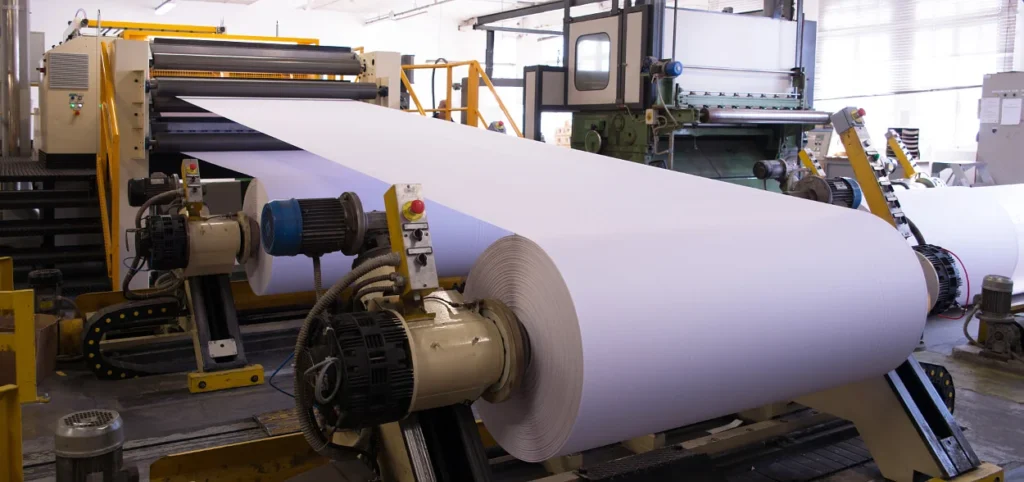
High-Speed Web & Paper Machine Monitoring
Cross-directional moisture profiling and structural defect mapping
Prevent catastrophic high-speed web breaks that cause costly downtime per break event. Our hyperspectral imaging line-scanners deploy over wide, high-velocity paper webs to track cross-directional moisture uniformity and basis weight simultaneously. Catch microscopic structural anomalies, localized damp spots, or chemical coating inconsistencies seconds before they can cause a sheet tear
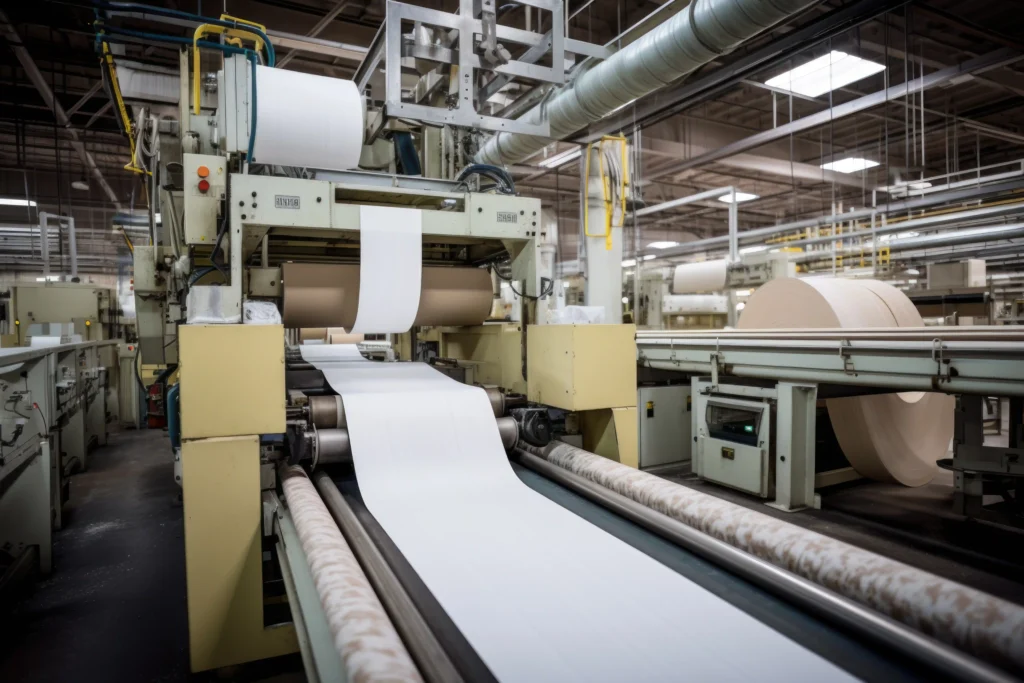
Biomass & Black Liquor Maximization
Optimizing the energy footprint of recovery boilers
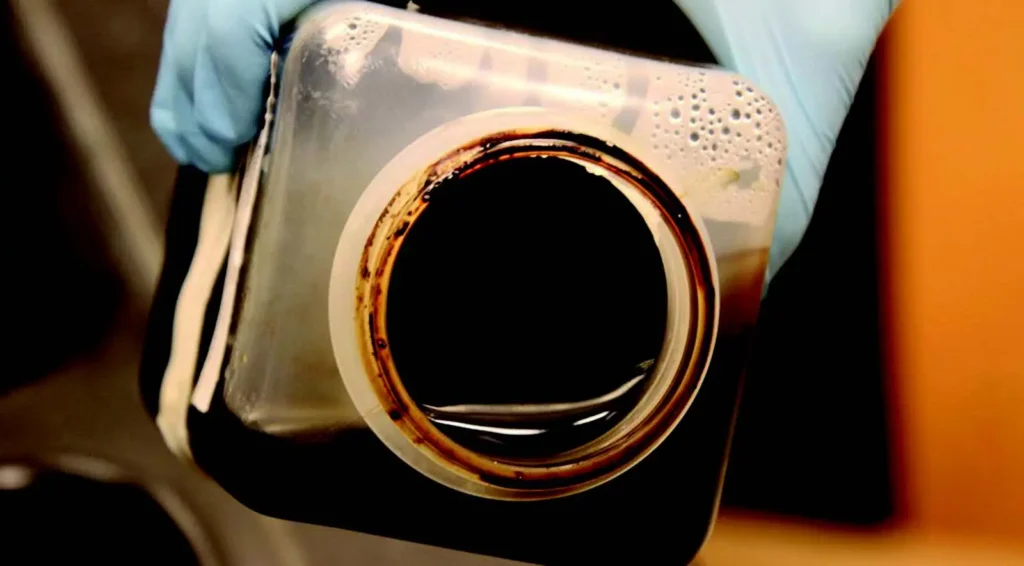
Turn forestry residuals and process byproducts into reliable energy assets. Monitor the chemical composition and dry solids content of black liquor lines continuously to ensure optimal spray atomization and stable combustion inside the recovery boiler. Additionally, profile incoming biomass and hog fuel for moisture and ash content, maximizing thermal output and minimizing boiler slagging
How We Integrate
From Experimental Data to Automated Mill Decisions
Innovation shouldn't mean operational risk. Our targeted Pilot Programs are built to integrate smoothly into your mill's distributed control network
Custom Cross-Web & Chute Arrays
Built for the toughest areas of the mill. Our hardware features specialized self-cleaning optical windows, dust-purged enclosures, and corrosion-resistant alloys capable of enduring the continuous humidity, heat, and chemical exposure typical of a modern pulp facility
The Co-Development Pilot Framework
Pioneering new ground requires structural guardrails. When you join our structured Pilot Programs, our specialized data scientists and application engineers deploy directly alongside your automation team. We establish a dedicated feedback loop, collecting localized mill data, training custom algorithms, and mapping spectral insights straight into your existing PLC or DCS architecture. Pilot outputs: baseline accuracy, control-variable mapping, integration checklist, and scale recommendation.
Decision-Ready Edge Analytics
We don't overcomplicate your control room. Our systems convert massive, multi-wavelength spectral curves into clean, actionable, binary or numerical control loops. Your automated mill systems receive precise, immediate metrics to optimize screw speeds, valve positions, and thermal setpoints without manual human intervention
Why Spectral Solutions?
Why Solid-State Spectroscopy Redefines Mill Automation
Traditional laboratory testing tells you what happened an hour ago. Spectral NA tells you what is happening right now inside the flow
Standard RGB Vision
- Surface color inspection only
- Misses deep chemical contrast
- Blind to internal moisture
Spectral NIR
- Continuous real-time analysis
- Zero moving optical parts
- Measures internal lignin & water
Manual Spot-Checks
- Creates long blind spots
- Slow reactive post-mortem data
- Causes costly chemical over-dosing
Fiber Process Adaptation
Automated Control Loops
Moving Parts
Frequently Asked Questions
An NIR sensor mounted over the conveyor measures chip moisture and density continuously as the material passes, with no manual sampling. Because moisture drives both the price paid on a green-weight basis and the energy the dryer consumes downstream, a continuous reading changes the purchasing decision and the dryer setpoint at the same time.
Yes. The spectral response differs enough between species groups for the sensor to profile the mix moving on the belt, so cooking conditions can be matched to what is actually entering the digester rather than to an assumed furnish. Mixed-species chip piles are the usual reason for cooking variability.
Inline measurement follows Kappa number and lignin removal through the digester and bleach plant continuously, so chemical dosing is corrected while the batch is still in process. A laboratory Kappa arrives after the decision point; a continuous reading moves the control action to the moment it can still change the outcome.
Chemical overdosing is mostly insurance against not knowing the incoming lignin load. When Kappa and lignin are measured continuously, dosing is set to the actual load rather than to the worst case, which lowers chlorine dioxide and peroxide consumption and reduces the load carried to the effluent plant. The saving scales directly with tonnage.
Yes. Scanning sensors on the paper machine profile moisture in the cross direction along with basis weight and coat weight, which is what identifies streaks and edge variation before they become sheet breaks or an off-specification reel. The value is in the profile across the web, not a single average figure for the sheet.
NIR measures dry solids content and chemical composition in black liquor continuously, which stabilizes recovery boiler firing and evaporator control. On biomass destined for energy, the same measurement of moisture and composition establishes the real energy value of what is being burned or sold, instead of an assumed figure.
Solid-state NIR has no moving mirrors or scanning parts, which is what fails first under mill vibration, steam, dust and temperature swings. Sensors are housed for washdown and process mounting and run without the alignment and environmental control a laboratory instrument requires. That is the practical reason laboratory-grade instruments have historically stayed in the laboratory.
With a defined proof of concept on a single measurement point, using the mill's own chips, liquor or web, before anything is permanently installed. It establishes whether the measurement is feasible on that material and what it is worth. That is a far smaller commitment than a mill-wide automation project, and it produces the data needed to justify one.

