
Laboratories:
The PoC Factory

Turn plant rollouts from "science projects" into predictable successes by building validation packs in a controlled environment. Once proven, deploy decision-ready AI models directly to the production line. Start with a PoC-90 Proof Plan.

Where We Act

De-Risk Industrial AI Deployment Long Before Day One

We don’t just sell laboratory instruments. We provide a structured sandbox where raw data is transformed into bulletproof operational intelligence.

Accelerated Feasibility Screening

Instantly validating your product’s spectral viability

Stop spending months guessing if NIR or Hyperspectral imaging can solve your specific quality hurdle. Send your matrices from alternative protein blends to sustainable polymers to our facility. Within days, our systems isolate the exact molecular fingerprints and establish feasibility and decision thresholds early, defining viability without disrupting your active plants.
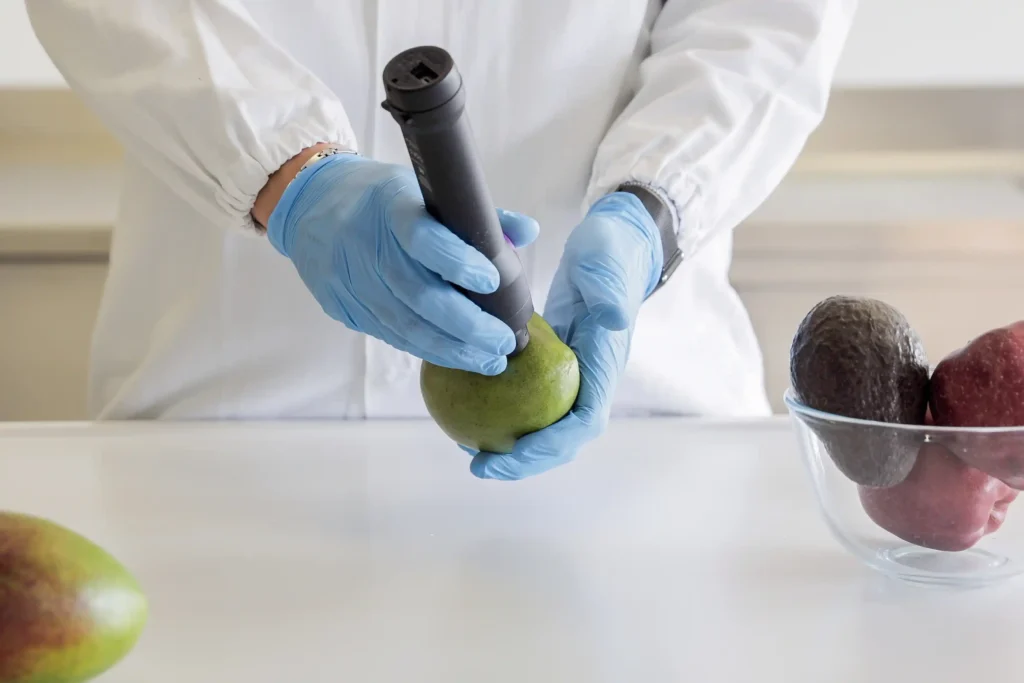
Validation Pack Engineering

Building robust, baseline calibration models

A model is only as good as the variables it predicts. In a controlled laboratory environment, we map out the real-world variances your line will encounter such as temperature shifts, raw material origins, and density fluctuations. We synthesize these into "Validation Packs," pre-calibrated AI data bundles tailored specifically to your target parameters.
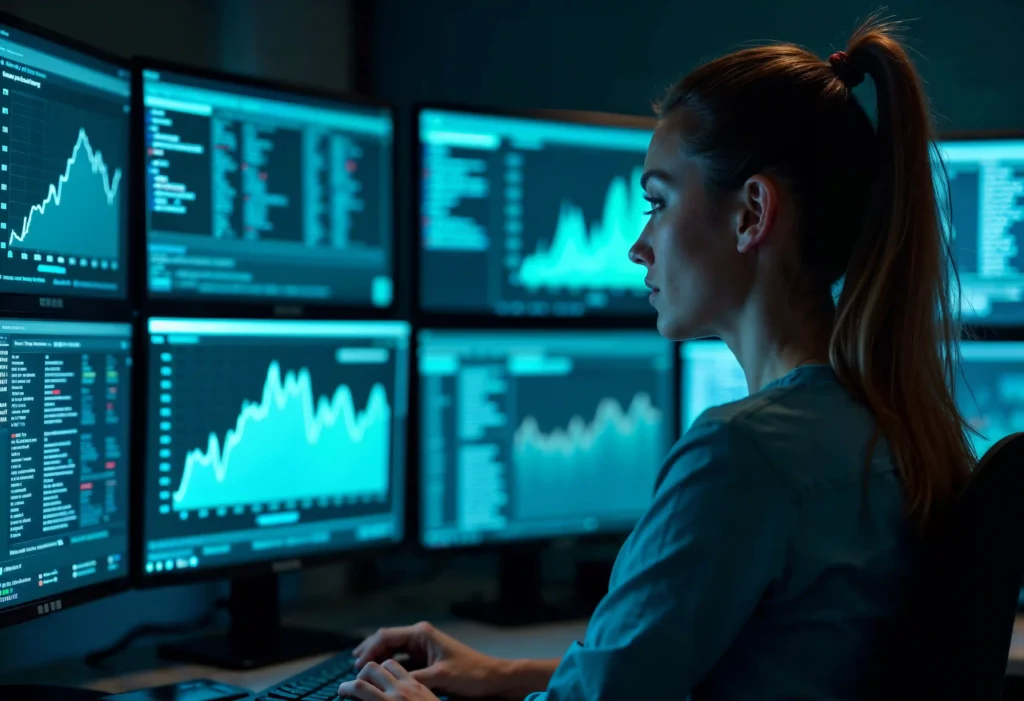
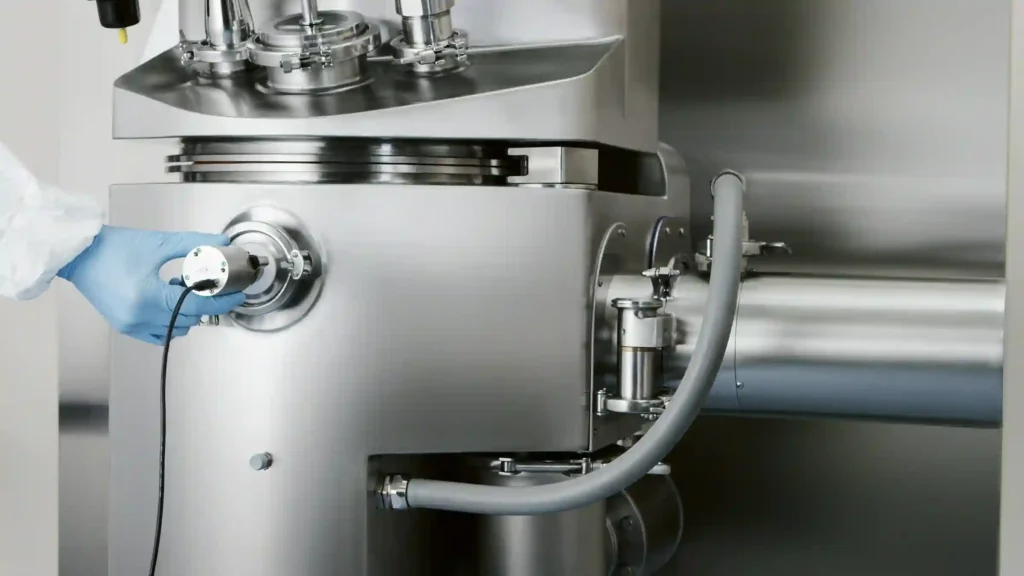
Precision Blending & Forage Optimization

Real-time mixer homogeneity and complete fiber profiling

Hit target homogeneity faster while cutting operational energy costs. Integrate our specialized process sensors into ruminant feed mixers to track the Relative Standard Deviation (%RSD) in real-time, signaling the automated system when optimal homogeneity is reached. For forage and silage processing, map out complete fiber profiles (NDF, ADF, ADL) and in vitro organic matter digestibility instantly, eliminating the 48-hour wet chemistry lab delay.
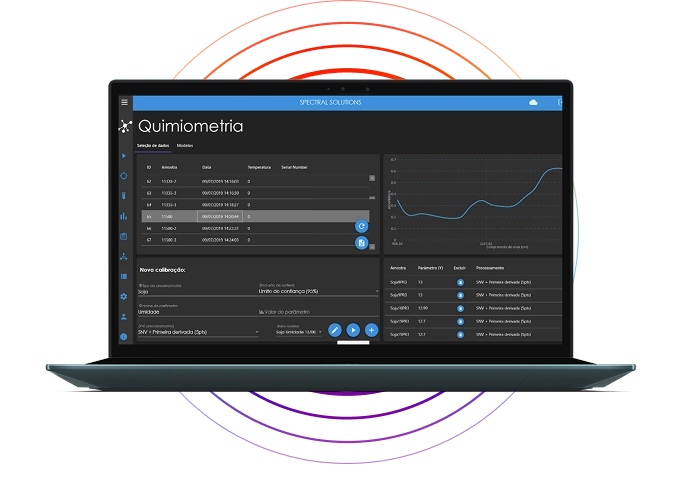
Enterprise Cloud Synchronization

Transforming laboratory breakthroughs into immediate global rollouts

Once a model is proven inside our PoC Factory, it shouldn't take months to deploy. With one click, your custom chemometric algorithms are translated into ready-to-use edge models. Streamed through the Spectral Cloud, these calibrated profiles are pushed instantly to inline sensors across 5, 50, or 100 facilities simultaneously, standardizing your global corporate quality metrics across sites in days—not months—using versioned deployments and governance.
How We Integrate

Research-Grade Precision Meets Factory-Floor Reliability

Our laboratory hardware and software ecosystems are designed to remove analytical complexity from the operator's hands

Why Spectral Solutions?

Defeating "Pilot Purgatory"

Why North American innovation leaders partner with the Spectral NA PoC Factory

Traditional Spectroscopy

The PoC Factory

In-Plant Trial & Error

0 d

Proof Plan Validation

0 click

Global Model Deployment

0 %

Simultaneous Facility Sync

Frequently Asked Questions

It depends on how variable your matrix is, not on a fixed number. The calibration set has to span the real variation you receive — origin, harvest, supplier, moisture, temperature and density — because a model can only predict inside the range it has seen. A narrow, stable matrix needs fewer samples; a highly variable one needs a set that reaches the extremes.

Because NIR is a secondary method. It does not measure protein or moisture directly — it predicts them from a model calibrated against the reference method, so a difference within the model's standard error of prediction is expected and normal. Agreement is judged against that error, not against an exact match with a single laboratory result.

Only if the new material falls inside the range the model was built on. Material from a different origin, season or process route can sit outside that range, and the model then has to be expanded with samples from it. This is why a calibration set is designed to cover origin variation from the start, and why models are monitored rather than assumed stable.

NIR responds to molecular bonds involving hydrogen, so it reads organic constituents well — water, protein, fat, starch, fiber, alcohol. It does not directly read trace minerals or contaminants at microgram-per-kilogram levels, and it does not perform elemental analysis. For those the reference method is still required; NIR is used for what it can measure at high frequency.

NIR measures the composition of a sample and returns one set of values for it. Hyperspectral imaging measures composition at every pixel, so it also shows where a constituent sits in the image. If the question is how much of something is in a material, use NIR; if it is whether something is there and where, use hyperspectral imaging.

A PoC is a structured validation on the client's own material and line speed, before any purchase commitment. In practice the instrument goes to the site, the team collects spectra from its real samples, a calibration is developed from them, and the predictions are compared against the plant's existing reference method. It answers with data whether the measurement is feasible for that specific product.

Yes. A model built in the laboratory can be deployed to other units of the same instrument family and synchronized across sites, so a second or tenth plant starts from a validated model instead of rebuilding one. What still requires local work is confirming that the new site's material falls inside the model's existing range.

By monitoring it. A small number of samples per period go to the reference method and are compared with the prediction, with the residuals tracked on a control chart. Drift usually means the incoming material has moved outside the calibration range rather than the instrument failing. Where several sites run the same model, the expanded version is distributed to all of them at once.

Then one is built from your samples. A calibration is developed from spectra of your own material, referenced against the results your current method produces for those same samples, which is why the reference data matters as much as the samples. A material no model has seen is the normal starting point of a project, not an obstacle to it.

Ready to see the invisible?

Talk to an expert


