
Animal & Pet Nutrition:
Formulation Confidence

Stop relying on random sampling and eliminate foreign material incidents while stabilizing key composition specs in real-time. We tune to your false-reject tolerance so throughput stays unchanged. Validated on your line during PoC.
Where We Act
Maximize Yield and Precision from Intake to Final Ration
We deploy solid-state near-infrared (NIR) solutions across your entire production stream to eliminate raw material uncertainty, reduce safety hazards, and protect formulation margins.
Raw Material Intake & Ingredient Verification
Immediate chemical screening at the receiving gate.

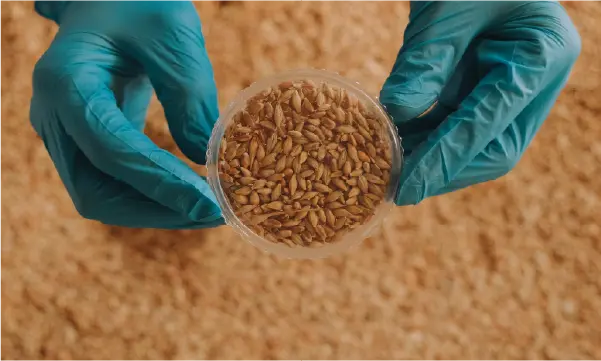
Lock in formulation accuracy before materials ever hit your storage silos. Instantly analyze incoming corn, soybeans, wheat, and sorting by-products for moisture, crude protein, crude fat, ash, and starch. Stop paying for high-moisture variances, enable supplier adjustments on the spot, and ensure your formulation matrix matches reality.
Animal Protein By-Products & Rendering Safety
Freshness verification and biogenic amine profiling
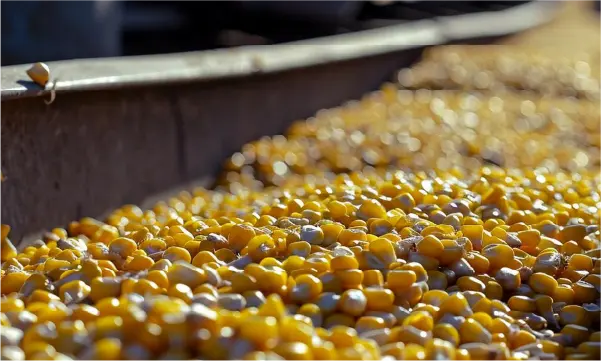
Protect palatability and animal health by dynamically grading incoming meat & bone, poultry, feather, and fish meals. Developed in partnership with world-class agricultural research entities, our specialized models go beyond basic fat and protein to screen for biogenic amine risk markers—such as histamine, putrescine, and cadaverine. Block rancid or degraded components at the gate to shield animal gut health.
Precision Blending & Forage Optimization
Real-time mixer homogeneity and complete fiber profiling
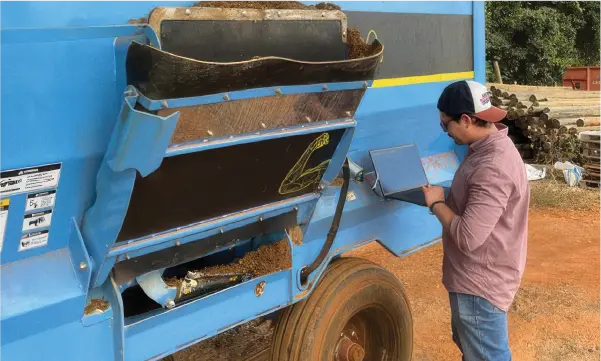
Hit target homogeneity faster while cutting operational energy costs. Integrate our specialized process sensors into ruminant feed mixers to track the Relative Standard Deviation (%RSD) in real-time, signaling the automated system when optimal homogeneity is reached. For forage and silage processing, map out complete fiber profiles (NDF, ADF, ADL) and in vitro organic matter digestibility instantly, eliminating the 48-hour wet chemistry lab delay.
Commercial Pet Food & Premium Feed Compliance
Label guarantee, shelf-life security, and macro-nutrient control.
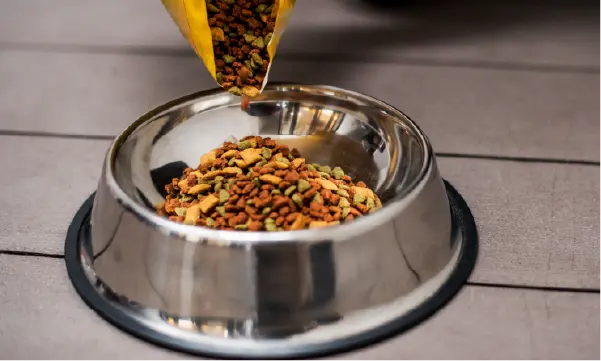
Secure reliable batch-to-batch nutritional balance for complex pet food kibble, aquaculture feed, and specialized livestock rations. Continually audit high-stakes compliance metrics—including uniform fat coatings for palatability, target moisture thresholds to prevent mold growth, starch gelatinization, Calcium, and Phosphorus. Maintain bulletproof brand trust and protect your facility from costly nutrient-deficiency recalls.
How We Integrate
Hardware Built for the Production Floor
From the receiving dock to the final packaging line, our technology fits seamlessly into your existing operations.
Inline & On-Line Process Sensors
Engineered to thrive inside high-capacity mixers, screw conveyors, pipes, and packaging lines. Featuring heavy-duty, dust-tight washdown enclosures, optional cooling jackets for high-temperature streams, and ATEX explosion-proof compliance (where required) for high-dust milling areas.
Benchtop Laboratory Systems
Reagent-free, non-destructive, and incredibly fast. Accelerate your facility's internal lab throughput by analyzing intact grains, bypass meals, and pellets in seconds—completely removing the need for time-consuming sample grinding, chemical extraction, or hazardous waste disposal.
Handheld Portable Devices
Put a powerful spectrometer in the palm of your hand. Connected directly via Bluetooth to smartphones and synchronized with the Spectral Cloud, field managers and grain buyers can run precise quality testing anywhere. Even with zero cell coverage at remote drop-off pits or open pasture docks.
Why Spectral Solutions?
A Quantum Leap Beyond Traditional Laboratory NIR Systems
Standard lab instruments require strict environmental control and constant upkeep. Spectral NA delivers ruggedized, maintenance-free operational certainty.
Wet Chemistry
- 48-hour operational delay
- Destructive sample preparation
- Uses hazardous chemical reagents
Spectral NIR
- Instant 3-second predictions
- Monolithic solid-state (No wear)
- Overcomes grain light scatter
Traditional FTIR
- Fails on whole/un-ground grains
- Moving mirrors prone to vibration
- High maintenance in milling areas
Total Scan Time
Lab Delay Bypassed
Moving Parts
Frequently Asked Questions
NIR spectroscopy measures moisture, crude protein, crude fat, ash and starch in 5 to 10 seconds per sample, with no chemical reagents and no grinding. Feed mills use it to verify corn, soybean meal and wheat at the receiving gate, so the formulation is corrected before the load reaches the silo instead of after the ration has already been blended.
Yes. A handheld NIR analyzer lets the operator scan the load at the receiving gate and accept, reject or re-route it in under a minute, without waiting days for a third-party laboratory report. The decision is made while the truck is still on the scale, so an off-spec load is rejected outright instead of being discounted after it is already in the silo.
Five to ten seconds per sample on a benchtop or handheld NIR system, against the days or weeks a third-party wet-chemistry laboratory needs to return a full proximate panel. The reading is reagent-free and non-destructive, so the same sample can be re-scanned or kept as a retain. That speed is what makes testing every incoming load practical, rather than sampling a fraction of them.
One scan returns moisture, crude protein, crude fat, ash and starch, plus NDF, ADF and ADL, in vitro organic matter digestibility, and calcium and phosphorus — for the parameters your calibration covers. Adding a parameter costs no extra time or sample, only the calibration work behind it. The same models run on handheld, benchtop and inline units, so a parameter validated in the laboratory transfers to the receiving gate.
An inline NIR sensor on the mixer or the transfer screw reads composition continuously and reports mix uniformity as relative standard deviation (%RSD) across the batch. Deviation is flagged before the batch is discharged, so an under-mixed load is corrected with additional mixing time rather than discovered later as a performance complaint from the farm.
NIR is a secondary method, so label guarantees stay anchored to the reference wet-chemistry method the model was calibrated against. In practice, mills use NIR for continuous in-house verification of every batch and periodic reference analysis to confirm the model still agrees. The combination gives far broader coverage than reference testing alone.
Yes. NIR measures moisture, protein, fat and ash on finished kibble, and an inline sensor after the coater verifies that fat and palatant coatings are applied at the target rate instead of over-applied. For premium and veterinary diets it produces batch-level evidence behind the nutritional claim printed on the bag.

